https://www.rooftophoney.com.au
Background
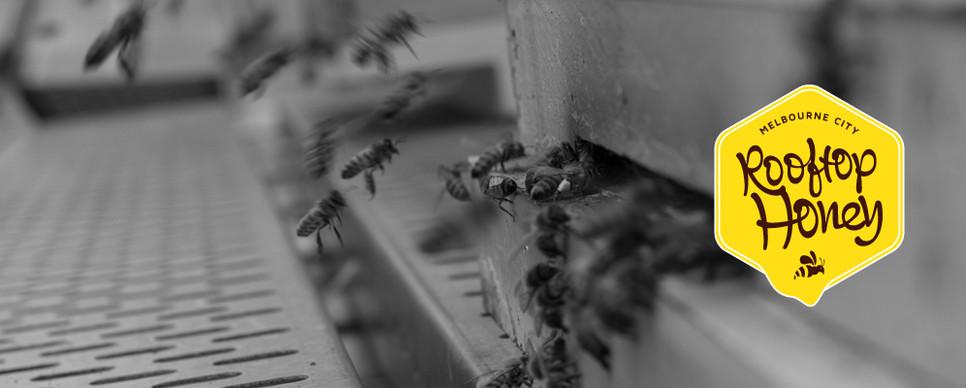
Rooftop honey is a company started in Melbourne in 2010. Their goal is to raise the awareness of the importance of bees in our society. The rooftop honey aims for the problem of sustainability. Bees have a really significant place for guaranteeing biodiversity in our world. 75% of our crops depend at least in part on bees. (Barilla centre July 19, 2019) In the current state, bees population is largely decreasing. Rooftop honey focuses on bringing the bees and honey into our daily life and promoting local honey sales. Australia is the fourth largest exporter of honey in the world after China, Argentina and Mexico. This industry is a huge contributor to the economic develop of rural areas. (Victoria Farmer’s Federation, 2019) The Australia honey industry now produces around $90 million annually. In an average year, Australian beekeepers produce between 25,000 and 30,000 tonnes of honey. (Australian honey bee industry council) The rooftop honey are bringing and their brand into city by placing hives on the roof space of shops, restaurants, cafes etc. These are places people would visit in their everyday life, the customers can see how their honey are made. The price of rooftop honey is $14.95 per 280g, and ethical honeys are $14.95 per 500g. They also have various bee wax products for sale. This price is acceptable for most people. However, this year is a hard year for everyone. The Covid-19 hit Melbourne hard, with all the shops closed and people home bound, it will be very hard to sell local honey. However, the rooftop honey can use this as an opportunity to put the idea of “supporting the local” out, hence helping to recover local economy. This brand very much fits the image of the nurturer, ‘driven by their need to protect and care for others’ (Sparkol 2015). When we think of honey, it is always very heart warming, and with the idea of helping sustainability in our society, and providing support to the community after the hit of Covid-19, it will fit the rooftop honey brand the most.
Objectives
The rooftop honey can attract customers through affection. By connecting to the customers emotionally, the customers are more likely to purchase their product, as by purchasing they are also helping the planet’s economic environment and saving the bees. The idea of how small actions by us can change the big world is heart touching.
Target audience
The target audience will be most Melbourne’s residents, aged 35-44, both male and female, which is 14.3% of the 439,087 population in Melbourne. (Australian Bureau of Statistics, 2019) The audience should be working either part-time or full-time, earning a salary above 50,000 p.a. These people would be very conscious to the environmental issues and are willing to pay for eco friendly products. These audiences will buy the rooftop honey’s products. They will be very happy to know that they helped the world to become a better place.
Single minded proposition
“LOVE from rooftop”
“The sweetness starts on the ROOFTOP”
“Natural sweetness from rooftop”
“Eco Bees”
“Pollinators of sweetness”
Substantiation
“Bees and other pollinating insects are indispensable for guaranteeing biodiversity and achieving Sustainable Development Goals. But they seriously risk extinction.” (Barilla Centre, 2019)
“We need bees. We may take them and other pollinators like butterflies and hoverflies for granted – but they are vital for stable, healthy food supplies. They are key to the varied, colourful and nutritious diets we need and have come to expect. “(Friends of the earth, 25 Jul 2017)
There are more than 800 wild bee species within Europe, seven of which are classified by the International Union for Conservation of Nature (IUCN) as critically endangered. A further 46 are endangered, 24 are vulnerable and 101 are near threatened. (The Conversation, August 2019)
Tone of voice
Bees are facing extinction, you have the power within you grip to save them, will you do it or not?
Media requirements
30 seconds instastory
Mandatory
Logo, SMP, Social media (Instagram, Facebook) and website address
Reference list
Sparkol 2015, ‘The 12 brand archetypes all successful businesses are built on’, weblog post, 1 September, retrieved 3 May 2020, <https://www.sparkol.com/en/blog/the-12-brand-archetypes-all-successful-businesses-are-built-on>
Barilla Center 2019’Save the bees for a sustainable development’retrieved July 19, 2019,<https://www.barillacfn.com/en/magazine/food-and-sustainability/save-the-bees-for-sustainable-development/>
Victoria farmers federation 2019,’HONEY PRODUCTION IN AUSTRALIA’ retrieved 2019<https://www.vff.org.au/vff/Industries/Horticulture/Beekeepers/Honey_Production_in_Australia/vff/Industry_Groups/Horticulture/Beekeepers/Honey_Production_in_Australia.aspx?hkey=bbb529de-9155-4a9f-b513-dd5fff5ad336>
Philip Donkersley 2019, ‘Bees: how important are they and what would happen if they went extinct?‘, retrieved 20 August 2019,<https://theconversation.com/bees-how-important-are-they-and-what-would-happen-if-they-went-extinct-121272>
Friends of the earth, ‘ why do. we need bees? ‘ , retrieved 25 Jul 2017 , <https://friendsoftheearth.uk/bees/why-do-we-need-bees>
Regional Population by Age and Sex, Australia, 2019, Victoria, retrieved 28 August 2020, <https://www.abs.gov.au/AUSSTATS/abs@.nsf/Latestproducts/3235.0Main%20Features152019?opendocument&tabname=Summary&prodno=3235.0&issue=2019&num=&view=>
Australian Bureau of Statistics 2018, 2016 Census QuickStats: Greater Melbourne,Australian Bureau of Statistics, retrieved 3 May 2020, <https://quickstats.censusdata.abs.gov.au/census_services/getproduct/census/2016/quickstat/2GMEL?opendocument>
Australian honey bee industry council 2014, The future of the beekeeping and pollination service industries in Australia, retrieved 31 march 2014, <www.honeybee.org.au>

